


By :
Rahman Jumaat
Date :
February 6, 2025
Travel as reflection
Safar in Vietnam: Travel, Reflection & Stewardship
An Islamic Perspective for Muslim Travellers Exploring Vietnam
In recent years, Vietnam has emerged as an increasingly attractive destination for Muslim travellers. From the cool highlands of Da Lat, the coastal beauty of Da Nang, to the mist-covered mountains of Sa Pa, Muslim visitors are discovering a side of Vietnam that resonates deeply with reflection, humility, and appreciation of Allah’s creation.
Yet in Islam, travel is never merely about sightseeing.
The Arabic word Safar (سفر) carries a deeper meaning — to unveil, to make apparent, to discover. Every journey uncovers not only landscapes, but truths about ourselves, our faith, and our responsibility as Muslims.
For a Muslim traveller, Safar is not an escape from faith — it is a continuation of it.
Safar in the Qur’an: Travel as a Means of Reflection
Allah repeatedly calls upon mankind to travel — not for indulgence alone, but for understanding:
“Travel through the land and observe how He began creation.”
(Surah Al-‘Ankabut, 29:20)
Travel in Islam invites us to:
- Reflect upon the signs (ayat) of Allah in creation
- Develop humility through exposure to different lives and cultures
- Gain wisdom through lived experience, not comfort alone
The mountains of Sa Pa, the forests of Da Lat, the rivers and coastlines of Da Nang are not random attractions. They are ayat of Allah, meant to awaken the heart and sharpen consciousness (taqwa).
Journey Over Destination: Why Safar Matters More Than Arrival
Modern tourism often prioritises:
- Checklists
- Social media moments
- Speed over meaning
Islamic travel prioritises something deeper:
- Niyyah (intention) before the journey
- Sabr (patience) during the journey
- Shukr (gratitude) upon arrival
When a Muslim travels with the intention to learn, to rest responsibly, and to appreciate Allah’s creation — the journey itself becomes an act of ibadah.
This is the essence of Safar.
Khalifah on Earth: Travel with Stewardship & Responsibility
Islam teaches that human beings are Khalifah (stewards) on Earth:
“Indeed, I will place upon the earth a steward (khalifah).”
(Surah Al-Baqarah, 2:30)
This role does not pause when we travel.
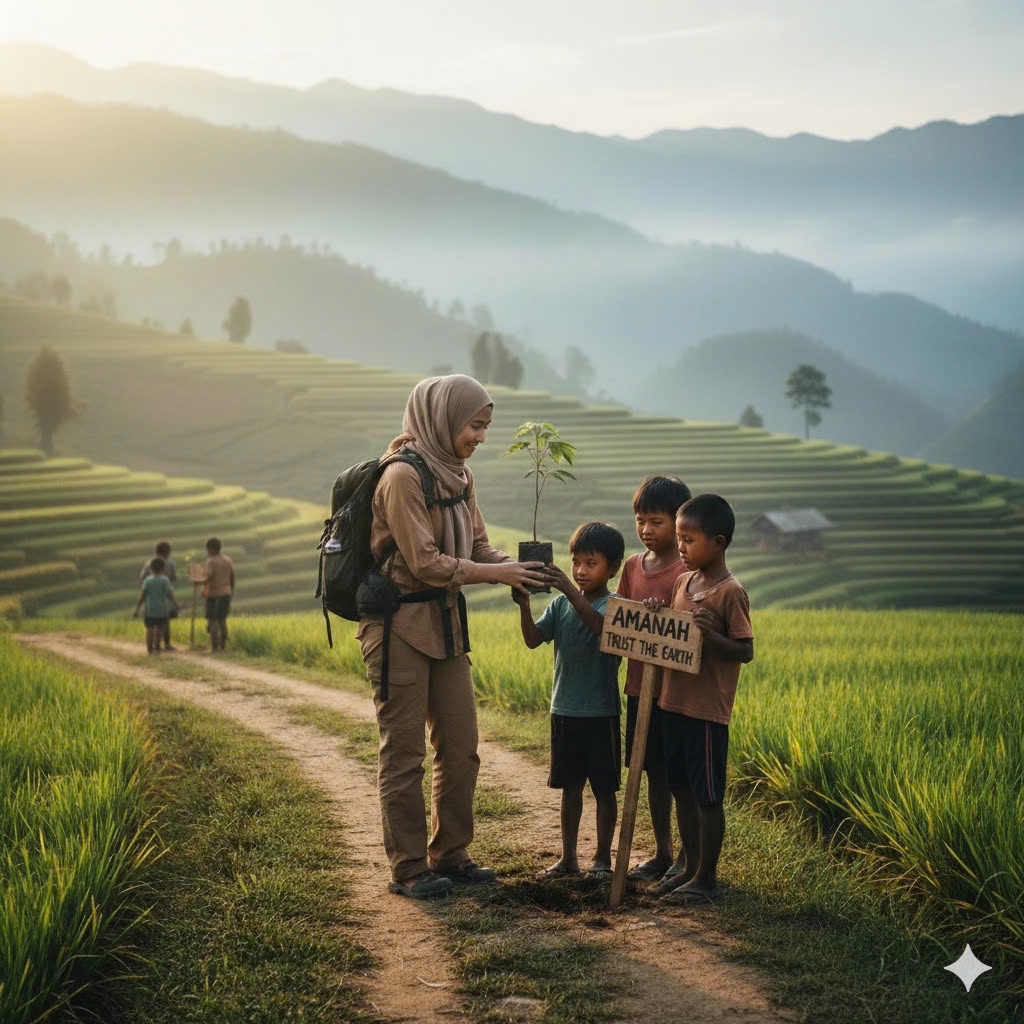
As Muslim travellers exploring Vietnam, we carry an amanah (trust) to:
- Protect natural environments
- Avoid waste and extravagance
- Respect local cultures and livelihoods
- Leave destinations better than we found them
Sustainability in Islam is not a trend — it is a religious obligation.
To pollute, exploit, or disrespect is a betrayal of our role as Khalifah.
Nature as a Space for Tadhakkur (تَذَكُّر) (Remembrance)
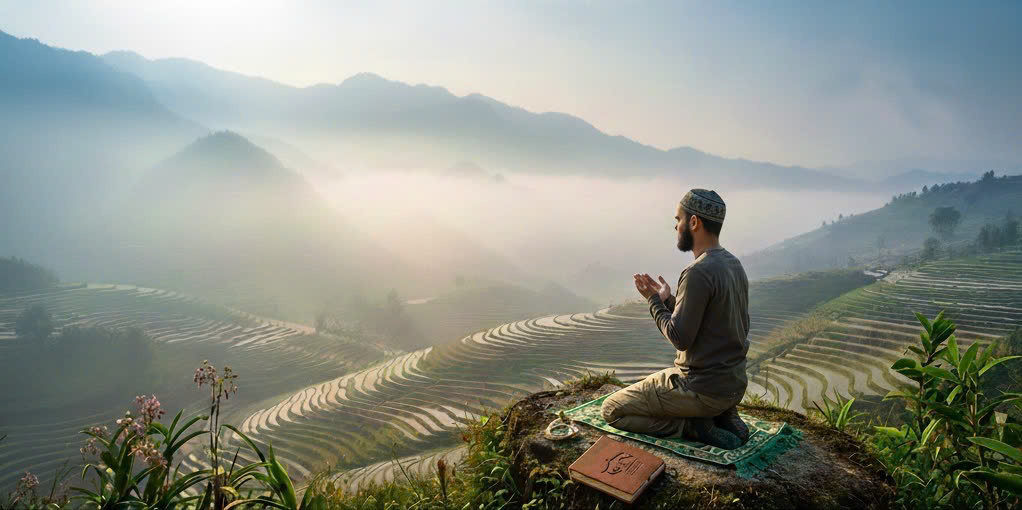
Vietnam’s landscapes offer moments of stillness that modern life often denies us.
The misty valleys of Sa Pa, pine-covered hills of Da Lat, and open horizons of Da Nang invite:
- Dhikr through silence
- Shukr through appreciation
- Tawakkul through recognising human fragility before Allah’s vast creation
Here, nature becomes a musolah without walls.
But remembrance must come with responsibility.
To benefit from nature while destroying it contradicts the spirit of Tazakkur.
Observing Hardship: Safar as a Reminder of Shukr
One of the most powerful lessons of Safar lies not only in landscapes — but in people.
In regions such as Sa Pa, Muslim travellers encounter ethnic communities like the H’mong, who have lived for generations in mountainous terrain under challenging conditions:
- Cold winters
- Steep landscapes
- Daily labour for basic survival
- A life shaped by nature rather than control over it
These observations should awaken:
- Shukr for warmth, shelter, food, and stability
- Humility, not judgement
- Awareness of blessings often taken for granted
Allah reminds us:
“If you are grateful, I will surely increase you.”
(Surah Ibrahim, 14:7)
This is not about romanticising hardship or turning poverty into spectacle — it is about learning through observation and allowing the heart to soften.
Gratitude Without Arrogance, Reflection Without Pity
Islam teaches balance.
The Prophet ﷺ said:
“Look at those below you and do not look at those above you, for that is more likely to prevent you from belittling Allah’s favours upon you.”
(Sahih Muslim)
Safar reminds us that:
- Gratitude must be free from arrogance
- Reflection must be free from condescension
- Awareness must lead to humility, not superiority
What we call “basic” is often a blessing others strive daily to secure.
Safar and Sustainability: Travel with Amanah
Every journey carries responsibility.
Muslim travellers should:
- Support community-based and ethical tourism
- Avoid exploitative experiences
- Reduce waste and environmental impact
- Respect cultural sensitivities and traditions
True Safar leaves dignity intact — for people and for places.
Why Safar Travel Vietnam Embraces This Philosophy
At Safar Travel Vietnam, travel is curated not only for comfort — but for meaning.
Our approach emphasises:
- Purposeful journeys over rushed itineraries
- Cultural respect over mass tourism
- Spiritual comfort alongside physical wellbeing
- Sustainability as part of Islamic stewardship
We believe travel aligned with faith transforms a holiday into a journey of reflection, responsibility, and growth.
Returning Home Changed: The True Measure of Safar
In Islam, the success of travel is not measured by:
- Photos taken
- Destinations checked off
But by:
- Perspective gained
- Character refined
- Gratitude deepened
A meaningful Safar returns the traveller more grounded, more conscious, and more aware of Allah’s blessings.
Final Reflection
Travel unveils not only landscapes — but hearts.
When Safar leads us to:
- Greater gratitude
- Deeper humility
- Stronger stewardship as Khalifah
Then the journey has fulfilled its purpose.
Travel humbles.
Gratitude elevates.
Safar transforms.
Your Journey, Our Hospitality.
written by: Rahman Jumaat
Share this :
Lorem ipsum dolor sit amet, consectetur adipiscing elit. Ut elit tellus, luctus nec ullamcorper mattis, pulvinar dapibus leo.