By :
Date :

DIY travelling

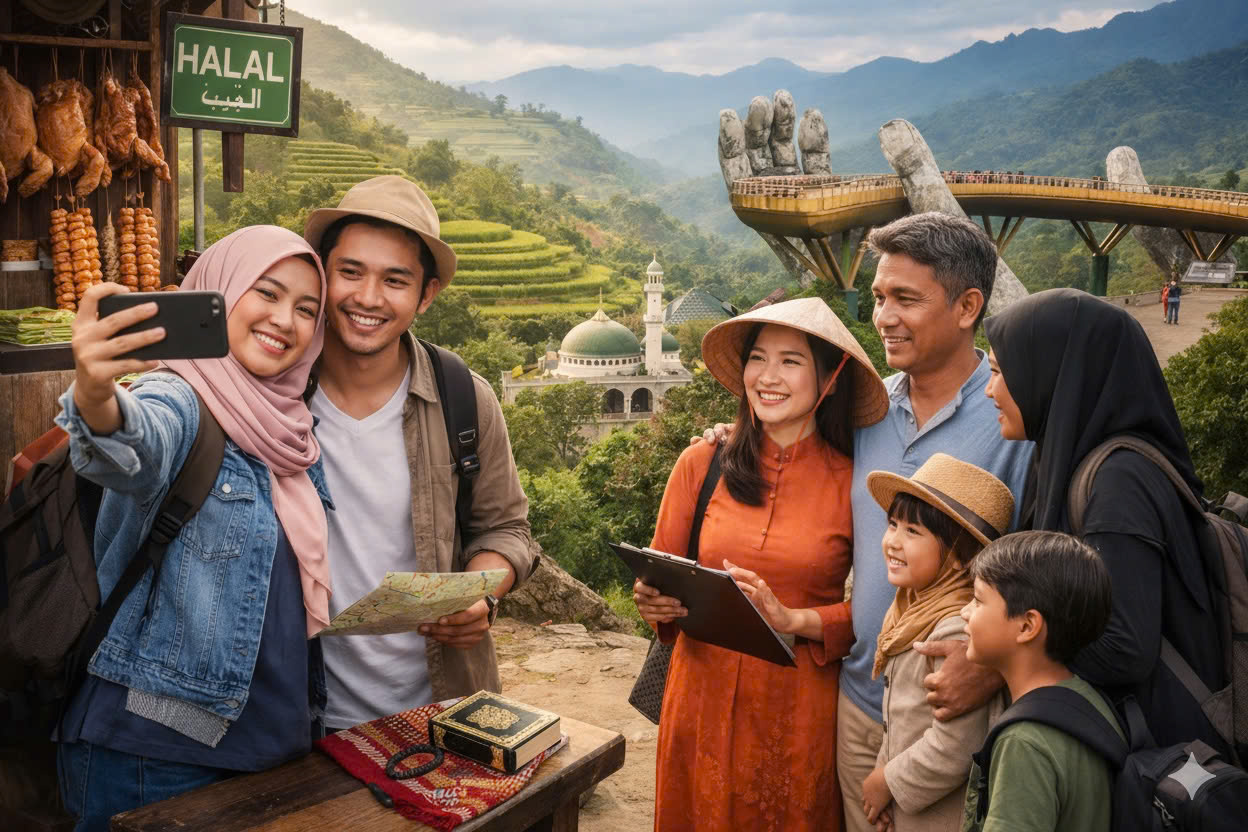
In recent years, Vietnam has quietly emerged as one of Southeast Asia’s most intriguing destinations for Muslim travellers. From the cool highlands of Da Lat, the coastal charm of Da Nang, to the misty mountains of Sa Pa, more Muslims—especially Gen Z and Millennials—are choosing Vietnam to experience its natural beauty, culture, and affordability.

However, as enthusiasm grows, so do the questions:
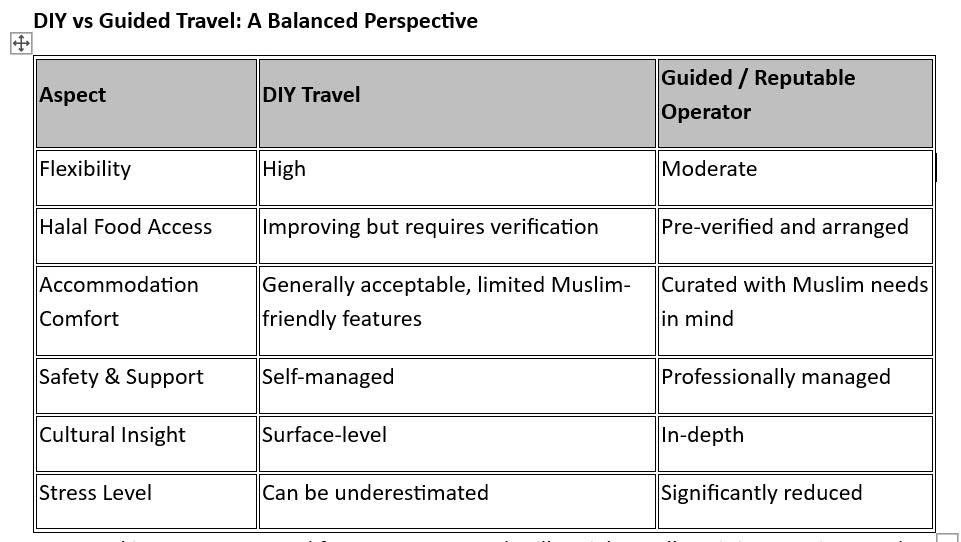
Should Muslim travellers explore Vietnam on a DIY basis, or is it wiser to engage reputable tour operators with experienced guides?

As a global halal tourism and hospitality expert, my role is not to discourage adventure—but to ensure that Muslim travellers make informed, safe, and spiritually comfortable decisions.

The Rise of DIY Travel Among Muslim Gen Z & Millennials

Younger Muslim travellers today are:

  • Digitally confident
  • Budget-conscious
  • Experience-driven
  • Influenced by TikTok, Instagram, and YouTube


DIY travel offers freedom, flexibility, and a sense of discovery. With booking platforms and translation apps, Vietnam appears “easy enough” to navigate independently.

Yet Vietnam is not a Muslim-majority country, and that reality requires deeper consideration—especially when it comes to halal food, prayer needs, cultural sensitivities, and logistics.

Key Factors Muslim Travellers Must Consider When DIY in Vietnam

  1. Weather & Climate Awareness

Vietnam’s climate varies significantly by region:

  • Da Lat & Sa Pa: Cool, misty, and unpredictable—temperatures can drop sharply.
  • Da Nang: Tropical and coastal—sudden rain, strong sun, or monsoon seasons.
  • Seasonal risks: Flooding, landslides, and flight disruptions.

For DIY travellers, lack of local weather insight can affect:

  • Safety
  • Comfort
  • Outdoor plans
  • Health (especially for families and elderly travellers)

Experienced tour operators monitor seasonal patterns and plan itineraries accordingly—something many DIY travellers’ underestimate.

  1. Halal Food: The Biggest DIY Challenge

Vietnamese cuisine is world-famous—but halal food is limited outside major cities.

DIY travellers often face:

  • Unclear ingredients (fish sauce, alcohol-based marinades, pork cross-contamination)
  • Language barriers when asking about halal status
  • Over-reliance on seafood or vegetarian meals
  • Food fatigue or nutritional imbalance

In destinations such as Sa Pa and Da Lat, the availability of halal and Muslim-friendly eateries is gradually improving, reflecting the rising number of Muslim travellers to these regions. However, options remain limited, scattered, and not always consistently certified, requiring careful verification by travellers.

Reputable Muslim-friendly tour operators therefore play an important role by:

  • Pre-arranging halal or Muslim-friendly meals at verified outlets
  • Working closely with trusted Muslim vendors and local partners
  • Ensuring food safety, ingredient transparency, and Shariah compliance
  • Reducing uncertainty, anxiety, and time spent searching for suitable dining options

This approach allows Muslim travellers to focus on enjoying the beauty of Vietnam—without compromising on their dietary and religious obligations.

  1. Hotels & Muslim-Friendly Accommodation

At present, Vietnam has very few dedicated Muslim-friendly hotels, particularly outside major cities. That said, most hotels are welcoming and accommodating, though Muslim-friendly features are not yet standardised.

Muslim travellers—especially those travelling on a DIY basis—may encounter the following realities:

  • Most hotels provide bidets or water hoses, though the design and placement may vary
  • Halal breakfast options are generally unavailable, with standard hotel buffets often including pork or non-halal items
  • Qibla direction can be easily identified using mobile apps, reducing one common concern
  • Dedicated prayer spaces are rarely available, particularly while travelling between destinations
  • Mini-bars typically stock alcohol, and hotel staff may have limited awareness of Muslim modesty or religious needs

In this context, experienced Muslim-friendly tour operators add value by carefully curating accommodations that are:

  • Comfortable and practical for Muslim guests, even if not officially Muslim-friendly
  • Briefed on basic Muslim requirements to minimise misunderstandings
  • Strategically located near halal eateries, mosques, or suitable prayer areas
  • Well-suited for families, female travellers, and multi-generational groups

While Vietnam continues to progress in its halal tourism readiness, thoughtful planning—especially around accommodation—remains essential for Muslim travellers seeking both comfort and peace of mind.

  1. Communication & Cultural Nuances

While Vietnamese hospitality is warm, English proficiency outside tourist hubs is limited.

DIY risks include:

  • Miscommunication with drivers or hotel staff
  • Difficulty handling emergencies or medical issues
  • Confusion in rural areas
  • Cultural misunderstandings

A licensed, experienced tour guide:

  • Acts as a cultural bridge
  • Protects travellers from scams or mispricing
  • Assists during emergencies
  • Enhances cultural appreciation—not just sightseeing
 

A Word of Advice for Muslim Travellers
You may want to consider engaging a reputable Muslim-friendly tour operator if you are:
• A first-time visitor to Vietnam
• Travelling with family members, elderly parents, or young children
• Seeking greater assurance on halal food and prayer arrangements
• Short on time or unfamiliar with regional travel conditions in Southeast Asia
👉 In such cases, working with an experienced operator is not a luxury—it is peace of mind.
For more experienced travellers who prefer DIY travel:
• Travel informed, not impulsive
• Go beyond social media reels and short-form content when planning
• Plan meals and prayer stop in advance, especially in smaller towns
• Respect local culture while safeguarding your faith practices

Vietnam Welcomes You – Travel with Awareness
Vietnam is a country of natural beauty, cultural depth, and genuine hospitality. As halal tourism infrastructure continues to improve, Muslim travellers are increasingly able to enjoy the country with confidence.
Whether you choose to travel independently or with professional support, the ultimate goal is not merely to visit—but to experience a journey that protects your wellbeing, respects your values, and supports your spiritual comfort.

Travel wisely.
Travel consciously.
Your journey matters.
Your Journey, Our Hospitality

written by: Rahman Jumaat

Share this :